.png)
Summarize this post with
We’re just recruiting in the wrong language.
If you’ve spent any time in HR or talent acquisition lately, you’ve probably seen the headline.
“Gen Z is unemployable.”
It keeps resurfacing in business publications, hiring panels, and executive conversations. The most recent version claimed only a tiny percentage of Gen Z shares the same work values hiring managers care about most.
That conclusion is not only wrong. It’s also lazy.
Because what’s actually happening right now is not a talent crisis.
It’s a translation problem.
Values aren’t disappearing. They’re being misread.
Work ethic, ambition, and accountability are not hardwired at birth. They are shaped by environment, incentives, and opportunity.
Most of Gen Z has barely entered the workforce. Judging their values based on outdated hiring signals misses the bigger picture.
This generation cares deeply about stability, fairness, growth, and purpose. What they do not respond to is corporate filler language, vague promises, and job posts that feel disconnected from real work.
When a 20-year-old scrolls past a job ad that says “competitive compensation and a dynamic environment,” it is not because they do not want to work.
It is because they do not know what that actually means. Or worse, they do not believe it.
The way people find jobs has changed. Recruiting hasn’t.
Gen Z communicates differently than the generations before them.
They live in short-form video.
They expect clarity in seconds, not paragraphs.
They trust what feels real, visual, and human.
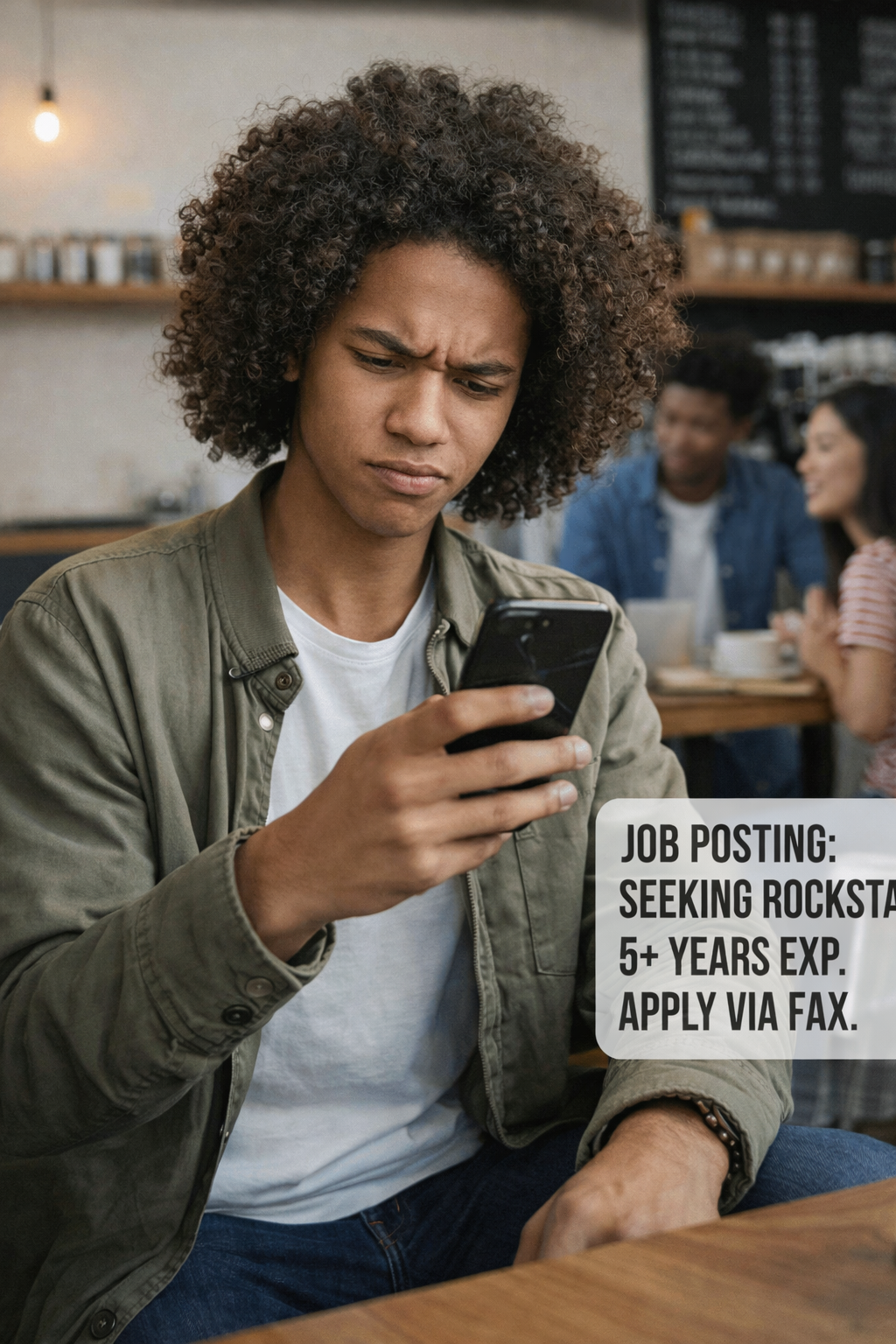
Yet many companies are still trying to hire them using job descriptions that read like legal documents, posted on platforms that feel frozen in 2005.
The mismatch is obvious.
We are asking a TikTok-native generation to decode corporate jargon on job boards they do not actively use, and then acting surprised when engagement is low.
Hiring the next generation is not about lowering standards.
This is the part that gets misunderstood most.
Meeting candidates where they are does not mean watering down expectations. It means translating them.
It means showing what the job actually looks like.
It means hearing from real employees, not stock photos.
It means explaining pay, schedule, growth, and culture in plain language.
It means using the platforms where attention already exists.
Social recruiting works because it mirrors how people already consume information. Fast, visual, and authentic.
When companies adapt to that reality, they do not attract worse candidates.
They attract better ones.
Frontline and skilled roles feel this gap the most.
This disconnect is especially painful in frontline, retail, hospitality, manufacturing, and skilled trades.
These roles are essential.
They are fast-moving.
They are often high-volume.
And yet they are still marketed with the same tired job posts and generic ads that fail to stand out in crowded feeds.
The result is predictable.
Low applicant volume.
High cost per hire.
Constant churn.
Burned-out recruiting teams.
Not because people are unwilling to work, but because the message never landed.
Social-first recruiting fixes the translation problem.
When job ads look and feel like the content people already consume, something changes.
Applications increase.
Time to hire drops.
Employer brand improves.
Recruiting spend actually works harder.
This is why social-first recruiting platforms are not just another channel. They are a reset.
They allow teams to:
- Turn real jobs into scroll-stopping video ads
- Show up where candidates already spend their time
- Automate and optimize campaigns instead of babysitting them
- Measure what actually drives applicants, not guesses
Most importantly, they help companies speak clearly.
The takeaway for talent leaders
Gen Z is not broken.
They are not lazy.
They are not unemployable.
They are simply fluent in a different language.
If recruiting teams keep insisting candidates adapt to outdated systems, the gap will only grow wider.
But for teams willing to translate, not lecture, the payoff is huge.
You may just find some of the most resourceful, motivated, and hard-working people you have ever hired.
They were listening the whole time.
You just needed to speak their language.